Preventing Reading Problems Starts in the First Five Years
What parents and caregivers can do now to set children up for later reading success
Across the country, schools are working to improve reading instruction. One clear lesson from research: sound-only drills (phonemic awareness without letters) aren’t enough to build readers. Children learn best when sounds, letters, and meaningful print are connected—long before kindergarten.
Good news: you don’t need worksheets or a curriculum to build these skills at home. You need language-rich, print-connected, joyful experiences—from birth to age five.
1) Talk (A Lot) From Day One
- Narrate daily life: “Now we wash hands—swish, swish!”
- Use rich vocabulary and respond to babbles; conversations wire the brain for language.
- Turn-taking with sounds and words teaches kids that communication has power.
2) Read Aloud Every Day—Read With Them
- Babies: board books to touch and mouth; point and name pictures.
- Toddlers: ask, “What do you see?”; let them turn pages; build routines.
- Preschoolers: predict, retell, and finish simple refrains (“…what do you see?”).
It’s the interaction, not finishing the book, that grows readers.
3) Connect Sounds to Letters in Real Life
Make casual, meaningful links: “M says /mmm/—M is for mommy.” Point to letters on signs, cereal boxes, and labels. When they hear a sound, show the matching letter.
4) Build Phonemic Awareness Through Play (No Worksheets Needed)
- “Find something that starts with /b/.”
- “Say sun without /s/.” (That’s a silly un!)
- Clap syllables in family names; play with rhymes at bath time.
5) Let Them See Themselves as Writers
Keep crayons and paper accessible. Celebrate scribbles, letter-like shapes, and invented spelling (“DOG” might be “DG”—that’s great!). Writing strengthens the same pathways they’ll use to read.
6) Don’t Rush “Early Reading”—Build Love, Knowledge, and Comprehension
Focus on vocabulary, background knowledge, and story sense. A child who loves books will read; a child drilled on flashcards may learn to hate it.
A Simple Daily Rhythm
- Talk during routines (meals, bath, walks)
- Read 10–20 minutes (anytime works!)
- Play with sounds (rhyme, first sounds)
- Spot letters in the world (signs, labels)
- Write & draw (lists, labels, cards)
Helpful Books & Tools
These are parent favorites for joyful, science-aligned early literacy. (Amazon affiliate links.)
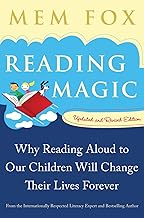
- Reading Magic by Mem Fox — how reading aloud builds language and love of books.
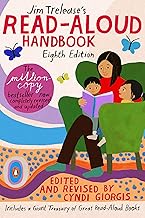
- The Read-Aloud Handbook by Jim Trelease — practical tips + read-aloud booklists.
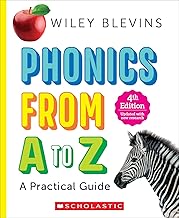
- Phonics from A to Z by Wiley Blevins — parent-friendly guide to sounds, letters, and print.
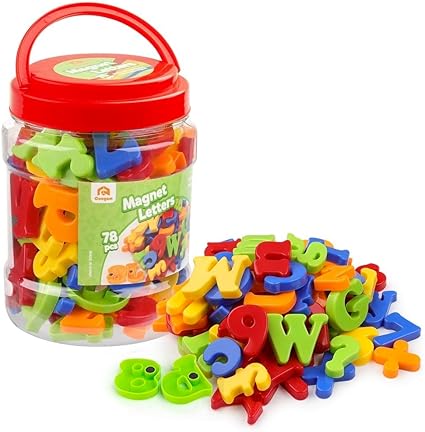
- Magnetic letters set — playful letter-sound connections on the fridge.
Disclosure: As an Amazon Associate I earn from qualifying purchases.
Free Family Resource
Grab my one-page checklist: “Early Reading Starts at Home: Daily Habits.”
Subscribe free to get it by email (plus new early-learning printables each week).
Evidence note: Decades of research support integrating phonemic awareness with letters and print and building rich oral language, background knowledge, and purposeful reading/writing in the early years. This article translates those ideas into simple family routines.
Early Learning Made Easy — Making Early Learning Simple, Joyful, and Evidence-Based.
- Subscribe free for weekly tips and printables
- Browse the ELME Gumroad shop
- Premium Membership ($5/month) for all printables
Disclaimer: Content is independently created and informed by evidence-based research; ELME is not affiliated with or endorsed by any external institution or author. All Rights Reserved.
✨ You’re Doing Amazing — Let’s Make Learning Simple ✨
Subscribe to my blog for instant access to today’s Featured Freebie — plus weekly printables, early learning tips, and new resource alerts.
✉️ Subscribe for Instant Access
Want unlimited access to every premium resource and future freebie — forever?
(One-time purchase. Lifetime access.)
Already a member? Request your freebie here
No spam — just real tools that make early learning simple, joyful, and evidence-based.
About Early Learning Made Easy:
Created by Ms. Vanessa, CDA-certified Early Childhood Educator. This blog provides simple, joyful, evidence-informed learning activities for families and caregivers.
Affiliate & Research Disclosure:
This site may include Amazon affiliate links. As an Amazon Associate, I earn from qualifying purchases at no additional cost to you. Content is independently created and informed by evidence-based research.
© Early Learning Made Easy — All Rights Reserved.