Search This Blog

Early Learning Made Easy

Showing posts with label child development. Show all posts

Sunday, March 15, 2026

Reducing Screen Time with Outdoor Learning

Early Learning Made Easy News

Reducing Screen Time With Outdoor Learning

Research continues to suggest that young children benefit when outdoor exploration, movement, conversation, and screen-free routines remain central parts of daily life.

By Vanessa Murray • Early Learning Made Easy • Outdoor learning, early childhood development, and healthy screen habits

Teacher helping preschool children plant a garden as a screen-free outdoor learning activity

Image by Vanessa Murray, created with Canva. Gardening and outdoor learning give children meaningful alternatives to passive screen time.

Quick Answer: Reducing screen time does not have to mean creating a harsh all-or-nothing routine. One of the most effective approaches is replacing passive screen use with outdoor learning, movement, conversation, and hands-on nature play. Research suggests young children benefit most when screen use does not displace active exploration, sleep, relationships, and real-world learning.

For many families, screen time is not a simple issue. Parents may rely on devices during stressful parts of the day, while also worrying that screens are taking up too much of childhood. That concern is understandable. Research on early screen use has become more detailed in recent years, and while not every digital experience is equally harmful, the overall message is becoming clearer: what children do instead of screens matters just as much as how much they use them.

Outdoor learning gives families a practical answer. Instead of trying to reduce screens through rules alone, parents and caregivers can make outdoor routines more central. When children have meaningful screen-free options, it becomes easier to shift habits without turning every transition into a battle.

What the research says about screen time

A systematic review from your uploaded research found that screen time generally has negative effects on early childhood physical and psychosocial well-being, while cognitive effects are mixed. The review identified language delay among the negative cognitive effects and noted that the strongest positive findings tended to involve screens as tools that made learning media more attractive, not a replacement for hands-on childhood experiences. :contentReference[oaicite:3]{index=3}

A Canadian Paediatric Society statement also emphasized that too much screen time means lost opportunities for teaching and learning, and specifically encouraged shared reading, outdoor play, easy board games, crafts, and turning off screens when not in use. It also warned against background television and encouraged adults to model healthy screen habits. :contentReference[oaicite:4]{index=4}

The 2024 JAMA Pediatrics meta-analysis added more nuance. It found negative associations between background TV exposure and higher-level cognitive outcomes, negative associations between age-inappropriate content and psychosocial outcomes, and concerns about caregiver screen use during interactions and routines. At the same time, the study found co-use with caregivers had a positive association with cognitive outcomes, reinforcing that quality and context matter. :contentReference[oaicite:5]{index=5}

Why outdoor learning works as a replacement, not just a restriction

Many screen-time conversations fail because they focus only on what families should remove. Outdoor learning works better because it gives children something meaningful to move toward. It replaces passive media with active participation.

When children water plants, dig in soil, look for worms, notice clouds, count rocks, compare leaves, or take a neighborhood nature walk, they are doing something developmentally rich. They are moving, observing, asking questions, hearing language in context, and using their senses. These are not filler activities. They are foundational learning experiences.

This is especially important in the early years because young children learn best through real-world interaction. Outdoor experiences combine sensory input, motor development, language, regulation, and early STEM thinking in one place.

Parent-friendly idea: Instead of saying “no more screen time” first, try offering a strong outdoor invitation first. “Let’s water the plants.” “Let’s go see if we can find three different leaves.” “Let’s check the garden after the rain.” Replacing is often easier than removing.

Outdoor learning supports the same areas parents worry about most

Parents often turn to screen-time guidance because they are worried about attention, tantrums, sleep, language, and behavior. Outdoor learning can help support all of those areas.

Outdoor routines encourage movement, which supports physical regulation. They often create calmer sensory patterns than busy indoor spaces. They prompt more natural conversation. They also help children practice patience, curiosity, and flexible thinking.

The outdoor learning review in your research set described benefits related to children’s holistic development, health and wellbeing, and multimodal hands-on learning opportunities. That is exactly why outdoor learning is such a powerful support for families trying to shift away from passive digital habits.

What this can look like in daily family life

Reducing screen time with outdoor learning does not require a perfect schedule, a large yard, or a formal nature program. It usually works best when it becomes part of predictable routines.

Some realistic examples include:

  • a short garden check before breakfast
  • an outdoor reset after naps or daycare pickup
  • a nature walk instead of a second round of videos
  • watering plants together after dinner
  • loose parts play outside on weekends
  • weather watching from the porch, yard, or sidewalk

For toddlers and preschoolers, repetition matters. Visiting the same outdoor space often can be more valuable than chasing new “activities” every day. Children begin to notice change over time, and that gives them something meaningful to focus on.

Screen reduction is easier when adults model it too

One of the most important findings in the screen-time research is that children are affected not only by what they watch, but also by adult screen habits around them. The JAMA Pediatrics review noted concerns about caregiver screen use during routines and interactions. That matters because children learn from shared attention. When adults are distracted by devices, children may lose opportunities for conversation, co-regulation, and connection. :contentReference[oaicite:7]{index=7}

Outdoor routines help with this too. They create spaces where adults can participate alongside children instead of managing behavior from a distance while multitasking. Even ten focused minutes outside together can shift the mood of an entire part of the day.

Outdoor learning does not have to be complicated

Families often assume they need Pinterest-perfect activities, but the most effective outdoor learning routines are usually simple:

  • digging
  • watering
  • collecting
  • comparing
  • noticing
  • building
  • walking slowly and talking about what you see

These activities are low-cost, screen-free, and aligned with the way young children actually learn. They also fit with current parent interest in unplugged play, nature activities, eco-conscious learning, and simple STEM routines at home.

Related articles and learning hubs

Outdoor Learning vs Screen Time: What the Research Says About Child Development

A deeper research comparison of screen use, outdoor learning, attention, and development.

Why Outdoor Play Is Essential for Early Childhood Development

See how outdoor play supports whole-child development beyond physical activity alone.

10 Nature Activities That Build Early STEM Skills

Simple, screen-free ideas that support science, math, and problem-solving outdoors.

Junior Naturalist at Resilient Roots

Families and educators can explore more outdoor activities and sign up for nature-based STEM lesson plans.

Frequently asked questions

How can outdoor learning help reduce screen time?

Outdoor learning gives children meaningful alternatives to passive media by replacing screens with movement, sensory play, observation, conversation, and real-world exploration.

Is all screen time bad for young children?

No. Research suggests context matters. Co-use with caregivers and age-appropriate content can be more supportive than passive viewing, background TV, or device use that displaces relationships and play.

What are easy screen-free outdoor ideas for toddlers and preschoolers?

Gardening, watering plants, nature walks, bug observation, digging, loose-parts play, weather watching, and collecting natural materials are all strong options.

Why is background TV a concern in early childhood?

Background television can distract children from play and interfere with attention, learning, and caregiver-child interaction during daily routines.

This article is independently created and informed by evidence-based research. It is not affiliated with or endorsed by any outside institution or author.

About Early Learning Made Easy:
Created by Ms. Vanessa, CDA-certified Early Childhood Educator. This blog provides simple, joyful, evidence-informed learning activities for families and caregivers.

Affiliate & Research Disclosure:
This site may include Amazon affiliate links. As an Amazon Associate, I earn from qualifying purchases at no additional cost to you. Content is independently created and informed by evidence-based research.

© Early Learning Made Easy — All Rights Reserved.

Nature Play and Social-Emotional Learning in Early Childhood

Nature Play and Social-Emotional Learning in Early Childhood

Nature play helps young children build more than science skills and strong bodies. It also supports some of the most important social-emotional abilities children need in the early years: confidence, self-regulation, empathy, cooperation, flexibility, and a sense of calm connection to the world around them.

When children play outdoors, they do not just “get energy out.” They negotiate over materials, solve problems together, manage frustration, try again after something falls apart, and learn how to notice both their own feelings and the needs of the people around them. In many cases, nature creates a gentler and more open-ended setting for those lessons than indoor spaces do.

Children exploring soil and plants with a teacher in an outdoor classroom garden

Image by Vanessa Murray, created with Canva. Garden exploration gives children opportunities to cooperate, notice, regulate, and learn together.

Quick Answer: Nature play supports social-emotional learning by helping children practice emotional regulation, cooperation, confidence, empathy, and problem-solving in real-world outdoor settings. Open-ended play with natural materials gives children meaningful opportunities to manage feelings, communicate needs, and build healthy relationships.

Why nature play and social-emotional learning fit so well together

Social-emotional learning in early childhood is about how children learn to understand feelings, manage emotions, build relationships, show empathy, and make responsible choices. Those skills grow best through real experiences, not just adult reminders. Children need chances to practice them.

Nature play creates those chances naturally. A child waiting for a turn with the watering can is practicing patience. Two children working together to move a log or fill a garden bed are practicing cooperation. A child who gets frustrated when a mud structure collapses and tries again is practicing persistence and emotional flexibility.

This is one reason researchers and educators have become increasingly interested in outdoor learning. The environment itself often invites interaction, curiosity, and calm engagement in ways that support emotional growth.

Nature can support self-regulation

Self-regulation is one of the most important early childhood skills. It includes the ability to manage behavior, cope with frustration, shift attention, and recover from challenges. Research from the mixed-methods systematic review in your uploaded files found positive associations between nature-based early childhood education and children’s self-regulation, social and emotional development, social skills, and play interaction. :contentReference[oaicite:2]{index=2}

That does not mean every outdoor moment automatically creates perfect behavior. But it does suggest that nature-rich environments can create conditions that make self-regulation easier to practice. Children have room to move. They are often more absorbed in meaningful tasks. The sensory experience can be rich without feeling as overstimulating as some indoor spaces.

Open-ended natural play also encourages children to set their own goals, test ideas, and manage uncertainty. That matters because regulation is not just about stopping unwanted behavior. It is also about learning how to stay engaged, adapt, and keep going.

Family tip: If your child seems overwhelmed indoors, try stepping outside before trying to “talk through” the problem. A short walk, time near plants, digging in dirt, or carrying water can help many children reset enough to reconnect.

Outdoor play supports empathy, cooperation, and communication

Children learn social skills by using them. Outdoor play gives them more opportunities to do exactly that. In the outdoor learning review from your research files, natural environments were described as supporting teamwork, responsibility, competence, self-confidence, independence, communication, and decision-making. Teachers also noted richer interaction and more in-depth questioning outdoors. :contentReference[oaicite:3]{index=3}

Why might that happen? Natural materials are more open-ended than many indoor toys. A stick can become a fishing pole, flag, wand, or bridge support. A handful of stones can become “treasure,” ingredients, counters, or building materials. Because the materials do not come with one fixed purpose, children often have to negotiate together.

That negotiation is valuable. It encourages:

  • sharing ideas
  • listening to other perspectives
  • taking turns
  • solving conflicts
  • working toward a common goal

Those are social-emotional skills in action.

Confidence grows when children see themselves as capable

One of the strongest themes in nature-based learning research is that children often begin to see themselves as capable learners. Natural environments offer many chances to try, fail, adjust, and succeed. A child who learns how to climb a small slope, balance on a log, carry a watering can, or help plant a seed experiences competence directly.

That matters for emotional development because confidence is closely connected to resilience. Children who believe they can solve problems and recover from setbacks are more likely to stay engaged, try again, and approach challenges with curiosity rather than fear.

Outdoor play supports that kind of confidence because it gives children authentic work to do. Their efforts matter in visible ways.

Nature play can feel calming and grounding

Many children appear calmer outdoors, and for good reason. Nature often provides a different sensory rhythm from indoor environments. There may be birdsong, wind, light movement, soil, leaves, water, and open space rather than constant noise, crowding, and artificial stimulation.

That calmer rhythm can help children who are still learning how to regulate strong feelings. It can also support children who seek movement or tactile input. Digging, watering, sorting, carrying, collecting, and observing all offer sensory experiences that feel purposeful and grounding.

This is one reason nature play and sensory play overlap so strongly. Outdoor environments often support both emotional regulation and sensory integration at the same time.

Nature play also supports imaginative and dramatic play

Social-emotional growth is closely tied to imagination. When children create pretend worlds together, they practice perspective-taking, flexible thinking, language, negotiation, and emotional expression. Natural settings often inspire sociodramatic and symbolic play because the materials are versatile and the environment feels open-ended.

A garden can become a farmers market. A patch of dirt can become a bakery. Sticks can become tools. Pinecones can become babies, ingredients, or treasure. Through imaginative play, children act out relationships and experiment with social roles in ways that help them understand themselves and others.

The systematic review in your files specifically described how nature-based early childhood settings can encourage diverse types of play, including sociodramatic and symbolic play, which may help explain some of the positive associations found in social and emotional development. :contentReference[oaicite:4]{index=4}

What this can look like at home or in the classroom

Families and teachers do not need a formal forest school to use nature play in socially and emotionally supportive ways. Some simple ideas include:

  • watering plants together and taking turns
  • doing a “calm walk” after a hard transition
  • offering loose parts outdoors for building and dramatic play
  • encouraging children to notice how different outdoor spaces feel
  • asking reflective questions like “What helped you keep trying?” or “How did you and your friend solve that?”
  • using garden care routines to build responsibility and cooperation

These small experiences add up. Over time, they help children connect feelings, relationships, and learning in meaningful ways.

Related guides and learning hubs

Why Outdoor Play Is Essential for Early Childhood Development

See how outdoor play supports movement, confidence, attention, and whole-child development.

The Science of Nature Play: How Outdoor Learning Shapes Children’s Brains

A research-backed article on nature play, brain development, and early learning.

Why Sensory Play in Nature Supports Emotional Regulation

A Resilient Roots companion article exploring sensory play and calm outdoor regulation.

Junior Naturalist at Resilient Roots

Families and educators can explore more nature-based activities and sign up for STEM lesson plans.

Frequently asked questions

How does nature play support social-emotional learning?

Nature play gives children real opportunities to practice self-regulation, cooperation, empathy, confidence, communication, and problem-solving through open-ended outdoor experiences.

Can outdoor play help with emotional regulation?

Yes. Many children feel calmer and more organized outdoors because nature offers movement, sensory input, and open space in ways that can feel grounding and less overwhelming.

Does nature play help children build social skills?

Yes. Outdoor play often encourages teamwork, turn-taking, negotiation, shared problem-solving, and communication because natural materials are open-ended and invite collaborative play.

What are easy nature play ideas for social-emotional growth?

Gardening, loose-parts play, calm walks, watering routines, mud play, collecting natural materials, and outdoor dramatic play are all strong options.

This article is independently created and informed by evidence-based research. It is not affiliated with or endorsed by any outside institution or author.

✨ You’re Doing Amazing — Let’s Make Learning Simple ✨

Subscribe to my blog for instant access to today’s Featured Freebie — plus weekly printables, early learning tips, and new resource alerts.

✉️ Subscribe for Instant Access


Want unlimited access to every premium resource and future freebie — forever?

⭐ Become a Premium Member

(One-time purchase. Lifetime access.)

🛍️ Shop All Resources

Already a member? Request your freebie here

No spam — just real tools that make early learning simple, joyful, and evidence-based.

About Early Learning Made Easy:
Created by Ms. Vanessa, CDA-certified Early Childhood Educator. This blog provides simple, joyful, evidence-informed learning activities for families and caregivers.

Affiliate & Research Disclosure:
This site may include Amazon affiliate links. As an Amazon Associate, I earn from qualifying purchases at no additional cost to you. Content is independently created and informed by evidence-based research.

© Early Learning Made Easy — All Rights Reserved.

Why Outdoor Play is Essential for Early Childhood Development

Why Outdoor Play Is Essential for Early Childhood Development

Outdoor play is not just a way for children to burn off energy. It is one of the most important ways young children build strong bodies, flexible minds, emotional resilience, and real-world problem-solving skills. When children run, dig, balance, climb, collect, compare, and explore, they are doing meaningful developmental work.

In the early years, children learn best through movement, relationships, sensory experiences, and hands-on discovery. Outdoor play naturally combines all four. It supports language, attention, social skills, executive function, and early STEM learning while also giving children something many modern routines leave too little room for: space to explore.

Preschool children exploring plants in a garden with a teacher during outdoor learning

Image by Vanessa Murray, created with Canva. Exploring gardens, plants, and outdoor classrooms helps children build curiosity, confidence, and early science thinking.

Quick Answer: Outdoor play supports early childhood development by strengthening motor skills, attention, emotional regulation, language, creativity, and early STEM learning. It gives children real opportunities to move, notice, compare, experiment, and connect with the world around them in ways indoor or screen-based experiences cannot fully replace.

Outdoor play supports the whole child

One reason outdoor play matters so much is that it does not only support one part of development. It supports many areas at the same time. A child balancing on a log is building coordination, confidence, judgment, and body awareness. A child scooping dirt into a bucket is developing fine motor strength, sensory processing, persistence, and early measurement concepts. A child on a nature walk may be practicing language, observation, memory, and emotional self-regulation all in a single experience.

This is one of the key strengths of outdoor learning environments. They are naturally multidimensional. Children are not simply memorizing information. They are experiencing it with their bodies and senses while connecting it to language, relationships, and imagination.

Movement and physical development happen naturally outside

Young children need frequent movement. Outdoor play gives them room to run, climb, crouch, carry, dig, jump, and balance in ways that indoor environments often limit. These experiences support gross motor development, coordination, core strength, endurance, and spatial awareness.

Unlike many indoor spaces, outdoor environments are not flat, predictable, or uniform. Grass, dirt, puddles, slopes, roots, garden beds, and natural materials challenge children to adapt. That challenge is valuable. It helps children build confidence in their bodies and learn how to assess risk in developmentally healthy ways.

Family tip: Outdoor play does not need to be elaborate to be meaningful. A garden, yard, park path, patch of dirt, or even a quiet nature walk can offer rich developmental benefits when children are allowed to move and explore.

Outdoor play strengthens attention and executive function

Executive function includes skills such as working memory, impulse control, and flexible thinking. These skills help children follow directions, shift plans, wait, solve problems, and manage frustration. Outdoor play supports these abilities because it constantly invites children to make decisions in real time.

A child deciding how to step across stones, how to carry a branch, or how to build a structure from loose parts is practicing planning and adjustment. Nature-rich environments also help support attention. Researchers studying outdoor learning in early childhood have described benefits related to children’s holistic development, wellbeing, and hands-on learning opportunities, suggesting that outdoor settings offer more than recreation alone. DOI: 10.1080/00131881.2023.2285762

That matters for families and teachers because attention is one of the skills many adults worry about most. Outdoor play is not a distraction from learning. It is one of the ways attention develops.

Nature and emotional regulation go hand in hand

Children often look calmer, more flexible, and more emotionally open after spending time outdoors. That is not just anecdotal. Outdoor environments tend to offer sensory variety without the same type of overload children often experience indoors. The breeze, shifting light, natural sounds, textures, and open space create a different rhythm for the nervous system.

For children still learning how to manage frustration, transitions, and big feelings, outdoor play can be deeply supportive. Digging, carrying, pushing, watering, sorting, climbing, or simply walking outdoors can help children reset and organize themselves.

This is one reason outdoor play is so closely connected to social-emotional growth. When children feel more regulated, they are often better able to communicate, cooperate, and recover from challenges.

Outdoor play creates real-world STEM learning

Outdoor play is one of the most natural pathways into early STEM learning. Children do not need a formal lesson on gravity to notice that heavy rocks fall differently than leaves. They do not need a worksheet on patterns to compare leaf shapes or identify repeating textures. They do not need a lecture on plant life cycles to watch seeds sprout, flowers bloom, and vegetables grow.

Outdoor environments invite real investigation:

  • What happens when I pour water here?
  • Why are worms near the surface after rain?
  • Which stick is strong enough to hold this up?
  • How many petals are on this flower?
  • Why is this patch of soil wetter than that one?

Those are STEM questions. When children explore them through play, science and math become meaningful rather than abstract.

Outdoor play supports language and literacy too

Families sometimes think of outdoor play as mainly physical, but it is also deeply language-rich. Children outdoors have more to describe, compare, notice, and ask about. Adults can expand language by naming textures, sizes, colors, actions, weather changes, and living things in real context.

Outdoor play also naturally supports storytelling and imaginative thinking. A garden can become a fairy village, a stick can become a fishing pole, and a patch of mud can become a bakery or a dinosaur dig site. This type of dramatic play strengthens vocabulary, narrative skills, social language, and flexible thinking.

Outdoor play and school readiness are not opposites

One of the most common myths about outdoor play is that it takes time away from academics. Research suggests the opposite can be true. In the nature-based preschool comparison study from your uploaded research, children in the nature-based preschool and non-nature preschool showed similar growth in early literacy, working memory, and inhibitory control over the school year, even though the nature-based classrooms spent on average about two more hours outdoors. That suggests high-quality outdoor-rich programs can still support important school-readiness skills.

In other words, outdoor play is not “less serious” learning. It is simply a different and often more developmentally aligned way to build the same foundations.

What families can do right now

Families do not need a large yard, expensive play structure, or formal forest school to make outdoor play part of childhood. The most helpful step is often just protecting time and lowering pressure.

Outdoor play can include:

  • walking slowly and letting children stop often
  • digging in dirt or planting seeds
  • collecting sticks, stones, and leaves
  • watching birds, insects, or clouds
  • making mud, pouring water, or building with loose parts
  • visiting the same outdoor place repeatedly and noticing changes

Simple, repeated experiences matter. Children do not need more entertainment. They need more chances to interact with the real world.

Related learning guides

The Science of Nature Play: How Outdoor Learning Shapes Children’s Brains

A research-backed look at how nature play supports attention, curiosity, and brain development.

Nature Play and Social-Emotional Learning in Early Childhood

Explore how outdoor experiences support empathy, regulation, confidence, and connection.

10 Nature Activities That Build Early STEM Skills

Hands-on ideas that help children learn science, math, and problem-solving through outdoor play.

Junior Naturalist at Resilient Roots

Teachers and families can explore more nature-based activities and sign up for STEM lesson plans.

Frequently asked questions

Why is outdoor play important for early childhood development?

Outdoor play supports physical, cognitive, social-emotional, and language development by giving children space to move, explore, solve problems, and interact with the real world.

Does outdoor play help with attention and self-regulation?

Yes. Outdoor play can support attention, flexibility, and emotional regulation because it combines movement, sensory input, and open-ended problem solving in a calmer environment.

Can outdoor play support school readiness?

Yes. Research suggests high-quality nature-rich early learning programs can support important readiness skills such as literacy-related growth, working memory, and inhibitory control.

What are easy outdoor play ideas for toddlers and preschoolers?

Nature walks, gardening, water play, digging, leaf collecting, bug observation, loose-parts building, and outdoor dramatic play are all strong options.

This article is independently created and informed by evidence-based research. It is not affiliated with or endorsed by any outside institution or author.

✨ You’re Doing Amazing — Let’s Make Learning Simple ✨

Subscribe to my blog for instant access to today’s Featured Freebie — plus weekly printables, early learning tips, and new resource alerts.

✉️ Subscribe for Instant Access


Want unlimited access to every premium resource and future freebie — forever?

⭐ Become a Premium Member

(One-time purchase. Lifetime access.)

🛍️ Shop All Resources

Already a member? Request your freebie here

No spam — just real tools that make early learning simple, joyful, and evidence-based.

About Early Learning Made Easy:
Created by Ms. Vanessa, CDA-certified Early Childhood Educator. This blog provides simple, joyful, evidence-informed learning activities for families and caregivers.

Affiliate & Research Disclosure:
This site may include Amazon affiliate links. As an Amazon Associate, I earn from qualifying purchases at no additional cost to you. Content is independently created and informed by evidence-based research.

© Early Learning Made Easy — All Rights Reserved.

Tuesday, March 10, 2026

Outdoor Learning vs Screen Time: What Research Says About Child Development

Outdoor Learning vs Screen Time: What the Research Says About Child Development

young children learning together in an early childhood setting as families consider screen time and real world learning balance

Photo by Kampus Production. Young children learn best when digital habits are balanced with real-world play, movement, and responsive interaction.

Quick Answer: Research suggests outdoor learning and active real-world play support attention, language, executive function, emotional regulation, and physical health in ways passive screen exposure cannot fully replace. Screen time is not all the same—content, timing, adult involvement, and total exposure all matter—but young children still learn most efficiently through hands-on exploration, movement, and live interaction with caring adults.

This is not a simple “screens are bad, outside is good” conversation. Families need realistic guidance, not guilt. But the research is clear on one important point: children’s brains and bodies benefit when outdoor exploration, play, and relationship-rich learning remain central to daily life.

Why this comparison matters in early childhood

In the early years, children are building the foundations for attention, memory, problem-solving, self-regulation, language, and social understanding. These skills do not grow in isolation. They develop through repeated, meaningful interaction with people, objects, places, and routines.

That is why the comparison between outdoor learning and screen time matters so much. Outdoor learning is not just “fresh air time.” It combines movement, novelty, sensory feedback, inquiry, conversation, and risk assessment. Screen time, by contrast, can range from passive viewing to co-viewed educational use. The developmental impact depends heavily on context.

Many families are trying to strike a balance. They want to know whether educational apps are enough, whether outside time really matters, and how to think about screen use without feeling judged. This article is meant to help with that.

What research says about screen time in the early years

Research on screen use in early childhood has become much more nuanced in recent years. Instead of asking only “how much screen time is too much?”, newer reviews also look at how screens are used, what children are watching, and whether adults are involved.

A 2024 systematic review and meta-analysis in JAMA Pediatrics included 100 studies with 176,742 participants and found that several screen-use contexts were associated with poorer cognitive or psychosocial outcomes. Program viewing and background television were negatively associated with cognitive outcomes, while age-inappropriate content and caregiver screen use during routines were negatively associated with psychosocial outcomes. Co-use with caregivers, however, showed a positive association with cognitive outcomes. That means the quality and context of screen use matter—not just the number of minutes on a timer.

A Canadian Paediatric Society position statement also emphasized that babies and toddlers learn most efficiently through live, responsive interaction with adults. Their review highlighted concerns around heavy or poorly structured screen exposure, especially when it displaces conversation, play, sleep, and physical activity.

Another systematic literature review found that screen time generally had negative effects on early childhood physical and psychosocial well-being, while cognitive effects were mixed. Some studies linked screens to language delays or lower academic outcomes, while others found limited benefits when technology was used intentionally as a learning tool. This is one reason blanket statements rarely help families. The better question is: What is screen use replacing?

What outdoor learning offers that screens cannot fully replace

Outdoor learning provides a rich mix of developmental experiences all at once:

  • Movement: climbing, balancing, running, lifting, digging, and navigating terrain build coordination and body awareness.
  • Sensory variety: children experience changing textures, sounds, temperatures, smells, and visual patterns in real time.
  • Attention practice: nature invites “soft fascination,” which can help restore focus and reduce overstimulation.
  • Open-ended problem solving: sticks become tools, puddles become experiments, and rocks become counting materials or engineering pieces.
  • Language-rich interaction: outdoor exploration creates natural opportunities for adults and children to talk, ask questions, and describe what they notice.
  • Emotional regulation: many children become calmer and more flexible when they have room to move, explore, and reset outdoors.

Importantly, these experiences often happen together. A child building a stick bridge is using motor planning, social cooperation, math thinking, imagination, persistence, and sensory integration at the same time. That kind of whole-child learning is difficult to replicate on a screen.

Parent-friendly takeaway: Screens can sometimes support learning, but they are best treated as one tool among many—not a replacement for active play, outdoor discovery, and relationship-based learning.

Outdoor learning supports attention, regulation, and executive function

Executive function includes working memory, impulse control, and flexible thinking. These are the skills children use to follow directions, wait, shift plans, solve problems, and manage frustration.

Outdoor learning supports executive function because children have to make real-time decisions. They judge whether a log is stable, decide how to carry a stick, remember where they saw a bug, or adapt their plan when the wind blows materials away. Nature play invites flexible thinking naturally.

That matters because research increasingly suggests that high-quality outdoor learning environments can support school-readiness skills. In the nature-based preschool comparison study you uploaded, children in nature-based classrooms averaged about two more hours outside than those in the non-nature preschool, yet still showed similar growth in early literacy, working memory, and inhibitory control. That is an important point for families and educators: outdoor learning is not “time away” from learning goals. It can be part of the learning process itself. :contentReference[oaicite:3]{index=3}

Language development: one of the clearest concerns around passive screen use

Among the most consistent concerns in early screen-time research is language development. When screens replace conversation, shared reading, outdoor talk, and responsive adult interaction, children lose opportunities to hear words in meaningful context.

Young children learn expressive language best through live interaction. That means hearing words while seeing gestures, faces, emotions, objects, and actions. Outdoor play is powerful for this because adults can label what children are doing in real time:

  • “That leaf is smooth on one side and bumpy on the other.”
  • “You noticed the worm came out after the rain.”
  • “Let’s compare the small rock and the large rock.”
  • “What do you think will happen if we pour more water?”

Screens may present vocabulary, but outdoor learning turns vocabulary into experience.

Physical development, health, and everyday childhood rhythms

Screen-time conversations often focus on attention and behavior, but the physical side matters too. Outdoor learning encourages activity, fresh air, gross motor practice, and less sedentary time. These are not minor side benefits. Physical health supports cognitive health.

The screen-time review you uploaded found more consistent negative effects in physical and psychosocial domains than positive ones. When children spend large amounts of time sedentary and indoors, it can affect sleep, physical activity, mood, and opportunities for real social interaction. Outdoor learning creates a healthier rhythm in the day by giving children chances to move, reset, and engage with the world beyond a device.

When screens can be helpful

To be fair to families, it is important to say clearly: not all screen use is harmful, and not all outdoor time is automatically meaningful. Some digital experiences can support learning when:

  • the content is age-appropriate
  • an adult is watching or interacting with the child
  • the screen is used in short, intentional ways
  • it extends a real-world interest rather than replacing it
  • it does not crowd out sleep, conversation, movement, or outdoor play

For example, a child who watches a short butterfly video with a caregiver and then goes outside to look for insects is having a very different experience from a child who passively views fast-paced content for hours without interaction. Co-use matters. Research increasingly supports that distinction.

What families can do instead of choosing all-or-nothing

Most families do not need a perfect media-free routine. They need a realistic plan that protects the experiences children need most.

A balanced approach might look like this:

  • protect daily outdoor time whenever possible
  • keep shared reading, conversation, and play as non-negotiables
  • use screens more intentionally instead of automatically
  • avoid heavy background TV
  • choose slower, age-appropriate content when screens are used
  • connect digital learning to real-world experiences

This approach reduces guilt and focuses on priorities. The goal is not perfection. The goal is making sure real-world childhood remains the center of the day.

Research snapshot table

Finding Data point Why it matters
Program viewing and cognition r = -0.16 More passive program viewing was linked with poorer cognitive outcomes in the 2024 meta-analysis.
Background television and cognition r = -0.10 Background media can interrupt play, conversation, and focused attention.
Co-use with caregivers and cognition r = 0.14 Adult involvement makes a meaningful difference in how children learn from media.
Age-inappropriate content and psychosocial outcomes r = -0.11 Content quality matters, especially in the early years.
Caregiver screen use during routines and psychosocial outcomes r = -0.11 Technoference can reduce shared attention, connection, and emotional availability.
Nature-based preschool comparison 82 nature-based vs 58 non-nature preschoolers Shows outdoor-rich programs can still support key school-readiness outcomes.

Related posts and learning hubs

The Science of Nature Play: How Outdoor Learning Shapes Children’s Brains

A cornerstone article on nature play, brain development, attention, and curiosity.

Reducing Screen Time With Outdoor Learning

Practical ideas for replacing passive screen time with meaningful outdoor experiences.

Cognitive Development in Early Childhood Hub

Explore brain development, executive function, play, language, and research-backed resources.

Sensory and Discovery in Early Childhood Hub

Connect sensory play, nature learning, STEM, regulation, and discovery-based exploration.

References

  • Mallawaarachchi S, et al. Early Childhood Screen Use Contexts and Cognitive and Psychosocial Outcomes: A Systematic Review and Meta-analysis. JAMA Pediatrics. 2024;178(10):1017–1026. DOI: 10.1001/jamapediatrics.2024.2620.
  • Ponti M. Screen time and preschool children: Promoting health and development in a digital world. Paediatrics & Child Health. 2023;28:184–192. DOI: 10.1093/pch/pxac125.
  • Irzalinda V, Latifah M. Screen Time and Early Childhood Well-Being: A Systematic Literature Review Approach. Journal of Family Sciences. 2023.
  • Fjørtoft I, et al. Outdoor learning in early childhood education: A systematic review. Educational Review. 2023. DOI: 10.1080/00131881.2023.2285762.

Frequently Asked Questions

Is outdoor learning better than screen time for young children?

Research suggests that outdoor learning offers developmental benefits screens cannot fully replace, especially for attention, movement, sensory input, regulation, and real-world problem-solving.

Are all screens bad for early childhood development?

No. The context matters. Age-appropriate content, short intentional use, and co-use with a caregiver may be more supportive than passive or excessive viewing.

Why is background TV a problem?

Background television can interrupt play, distract attention, and reduce the amount and quality of caregiver-child interaction.

Can outdoor play help with attention and self-regulation?

Yes. Outdoor play and nature-rich learning often support executive function, calmer attention, and emotional flexibility.

How can families create a better balance?

Protect daily outdoor time, keep shared reading and conversation central, reduce passive background media, and use screens intentionally instead of automatically.

Conclusion

The most helpful way to think about outdoor learning versus screen time is not as a competition between “old-fashioned” and “modern” childhood. It is about understanding what young children need most for healthy development.

They need movement, conversation, sensory experience, secure relationships, curiosity, open-ended play, and real-world problem-solving. Outdoor learning supports all of those at once. Screens may sometimes add value, but they work best when they do not replace the core experiences children need to grow.

If families and educators protect time for nature, play, and connection, they are not falling behind. They are building the strongest possible foundation for learning.

✨ You’re Doing Amazing — Let’s Make Learning Simple ✨

Subscribe to my blog for instant access to today’s Featured Freebie — plus weekly printables, early learning tips, and new resource alerts.

✉️ Subscribe for Instant Access


Want unlimited access to every premium resource and future freebie — forever?

⭐ Become a Premium Member

(One-time purchase. Lifetime access.)

🛍️ Shop All Resources

Already a member? Request your freebie here

No spam — just real tools that make early learning simple, joyful, and evidence-based.

About Early Learning Made Easy:
Created by Ms. Vanessa, CDA-certified Early Childhood Educator. This blog provides simple, joyful, evidence-informed learning activities for families and caregivers.

Affiliate & Research Disclosure:
This site may include Amazon affiliate links. As an Amazon Associate, I earn from qualifying purchases at no additional cost to you. Content is independently created and informed by evidence-based research.

© Early Learning Made Easy — All Rights Reserved.

The Science of Nature Play: How Outdoor Learning Shapes Children’s Brains

The Science of Nature Play: How Outdoor Learning Shapes Children's Brains

Baby observing a butterfly during outdoor nature exploration

Photo by Vanessa Murray. A young child observing a butterfly during outdoor exploration, demonstrating curiosity and early scientific thinking.

Quick Answer: Research shows that regular outdoor play supports brain development in young children by improving attention, emotional regulation, curiosity, and early problem-solving skills. Studies of nature-based early childhood programs consistently find stronger outcomes in social, cognitive, and physical development compared to primarily indoor learning environments.

Why Nature Play Matters for Brain Development

During the first five years of life, the human brain forms more than one million neural connections every second. These connections develop through **active interaction with the environment**. Natural environments provide something indoor spaces often cannot: a constantly changing sensory landscape. Children exploring nature experience:
  • Movement across uneven surfaces
  • Dynamic visual stimuli
  • Complex sounds and textures
  • Open-ended opportunities for discovery
Each of these experiences stimulates different neural pathways that support cognitive development. A large systematic review of nature-based early childhood programs found consistent evidence that outdoor learning environments enhance children's **executive functioning, emotional regulation, and creativity** compared to conventional indoor learning environments. (DOI: 10.1080/00131881.2023.2285762) These findings help explain why many educators and researchers increasingly view **nature play as a critical component of early learning.** ---

Nature Play Strengthens Attention and Focus

One of the strongest research findings in this field involves **attention restoration theory**. Natural environments allow the brain to recover from the mental fatigue associated with structured tasks and digital media exposure. Children playing in natural environments tend to:
  • Maintain focus longer
  • Demonstrate improved impulse control
  • Show stronger problem-solving persistence
Researchers studying outdoor early learning environments found that children participating in nature-based preschool programs demonstrated **improved self-regulation and sustained attention** when compared with children in traditional indoor classrooms. This improvement in attention may also help explain why outdoor learning environments are increasingly recommended for children with attention regulation challenges. ---

Nature Supports Emotional Regulation

Outdoor play also contributes significantly to emotional development. Nature provides children with opportunities to:
  • Experience manageable risk
  • Develop confidence through exploration
  • Practice emotional regulation
  • Engage in imaginative social play
A growing body of research suggests that nature exposure can reduce stress and support emotional resilience in young children. For example, studies examining nature-based early childhood education programs report increased **social cooperation, empathy, and emotional stability** among children who regularly engage in outdoor exploration. This effect may be partly explained by the calming influence of natural environments on the nervous system. ---

Nature Play Encourages Early STEM Learning

Natural environments also provide an ideal setting for early science learning. Young children naturally engage in scientific thinking when they explore outdoor environments. Common examples include:
  • Observing insects
  • Comparing plant growth
  • Experimenting with water and soil
  • Testing how objects move or fall
These everyday discoveries build the foundation for later **STEM learning** by encouraging curiosity and experimentation. Research examining nature-based preschools found that children participating in outdoor exploration activities demonstrated stronger early **scientific reasoning and inquiry skills** than peers in conventional early childhood settings. ---

Research Snapshot

Research Finding Outcome for Children
Regular outdoor learning environments Improved attention and executive functioning
Nature-based preschool participation Stronger emotional regulation and cooperation
Exploration-based outdoor play Greater curiosity and problem-solving ability
Reduced screen exposure with outdoor play Improved cognitive and social development
These findings come from multiple peer-reviewed studies examining the relationship between nature exposure and early childhood development. ---

Practical Ways Families Can Encourage Nature Play

Parents and caregivers do not need access to large wilderness areas to support nature play. Simple everyday experiences can provide powerful learning opportunities. Examples include:
  • Observing insects in the backyard
  • Exploring local parks
  • Planting small container gardens
  • Watching seasonal changes in trees
  • Collecting leaves, stones, or flowers
These small interactions help children build a sense of curiosity and connection with the natural world. ---

Related Research-Based Learning Guides

---

Frequently Asked Questions

Is nature play necessary for child development?

Research strongly suggests that regular interaction with natural environments supports cognitive, emotional, and physical development during early childhood.

How much outdoor time do children need?

Many early childhood programs recommend **at least one to three hours of outdoor play daily**, depending on age and weather conditions.

Does nature play help children focus better?

Yes. Studies show that natural environments can help restore attention and improve executive functioning in children. ---

Conclusion

The growing body of research on nature-based early childhood education suggests something many parents and educators have long suspected: **children learn best when they are free to explore the world around them.** Outdoor environments encourage curiosity, strengthen emotional resilience, and stimulate the developing brain in ways that structured indoor activities cannot fully replicate. Whether it happens in a backyard, a neighborhood park, or a nature-based preschool program, regular interaction with the natural world can play an important role in supporting healthy childhood development.

✨ You’re Doing Amazing — Let’s Make Learning Simple ✨

Subscribe to my blog for instant access to today’s Featured Freebie — plus weekly printables, early learning tips, and new resource alerts.

✉️ Subscribe for Instant Access


Want unlimited access to every premium resource and future freebie — forever?

⭐ Become a Premium Member

(One-time purchase. Lifetime access.)

🛍️ Shop All Resources

Already a member? Request your freebie here

No spam — just real tools that make early learning simple, joyful, and evidence-based.

About Early Learning Made Easy:
Created by Ms. Vanessa, CDA-certified Early Childhood Educator. This blog provides simple, joyful, evidence-informed learning activities for families and caregivers.

Affiliate & Research Disclosure:
This site may include Amazon affiliate links. As an Amazon Associate, I earn from qualifying purchases at no additional cost to you. Content is independently created and informed by evidence-based research.

© Early Learning Made Easy — All Rights Reserved.

Monday, November 17, 2025

Let Them Make a Mess — The Surprising Benefits of Self-Feeding

Let Them Make a Mess: The Surprising Benefits of Self-Feeding

Early Learning Made Easy Feeding & Nutrition

Affiliate Disclosure: This post contains Amazon affiliate links. If you purchase through these links, I may earn a small commission at no extra cost to you.

Why Messy Mealtimes Matter

Picture this: your baby in their highchair, hands full of mashed sweet potato, yogurt streaked across their face, and a proud grin as they explore every bite. For many caregivers, this scene sparks an instinctive desire to reach for a wipe. But before you do—pause. That messy moment is actually a powerful part of your baby’s development.

Self-feeding isn’t just about getting calories in. It’s a full-body sensory experience that helps babies learn about the world, build coordination, and develop a healthy relationship with food. When we rush to tidy or do all the feeding for them, we may accidentally limit their chances to practice important skills.


The Sensory Magic of Messy Eating

Babies learn best through their senses. Each squish, smear, and squeeze gives their brain new information about texture, temperature, color, and consistency. Feeling mashed banana versus soft avocado or crunchy puffs teaches them to notice differences—an essential foundation for sensory processing skills.

Sensory processing refers to the brain’s ability to receive, organize, and respond to information from the senses. When babies have regular chances to explore different food textures with their hands and mouths, they often become more comfortable with new experiences—both at mealtime and in everyday life.

On the other hand, if food play is always shut down quickly (“That’s too messy!” “Yuck, don’t touch that!”), some children may become more cautious or sensitive. Over time, that can show up as refusing certain textures, avoiding “messy” activities like finger paint, or feeling overwhelmed by new foods on their plate.

Building Fine Motor Skills, One Pea at a Time

Picking up a single pea might seem like a tiny victory—but for a baby, it’s a big deal. Self-feeding is a workout for the small muscles in the hands, fingers, and wrists. These are the same muscles children will later use for scribbling, turning pages, zipping coats, and writing their names.

When babies grasp finger foods or guide a spoon toward their mouth (even when it misses!), they’re practicing:

  • Hand-eye coordination – matching what they see with how their hands move.
  • Pincer grasp – using the thumb and index finger to pick up small pieces.
  • Bilateral coordination – using both hands together, like holding a bowl with one hand and scooping with the other.

All of this practice builds strength, confidence, and body awareness. Messy mealtimes are really early fine motor workouts in disguise.

The Long-Term Nutrition Benefits

Allowing babies to self-feed does more than boost motor and sensory skills—it helps shape lifelong eating habits. When children are given reasonable choices and trusted to decide how much to eat from what is offered, they build a stronger internal sense of hunger and fullness. This is sometimes called intuitive eating.

This freedom supports:

  • Positive mealtime relationships – food becomes something to enjoy and explore, not a battle.
  • Healthy weight regulation – children learn to stop eating when they feel full instead of when the plate is empty.
  • Reduced picky eating – kids who are allowed to interact with new foods at their own pace are more likely to eventually taste and accept them.

Research in child development and nutrition suggests that pressuring children to “clean their plate,” bribing them with dessert, or constantly wiping and correcting can increase mealtime stress. Over time, this stress can make children more selective and less willing to try new foods. Gentle, responsive self-feeding sends the opposite message: “I trust you. Your body knows what it needs.”

Overcoming the Fear of the Mess

It’s completely understandable—nobody loves scrubbing oatmeal off the floor. The goal is not a picture-perfect kitchen; the goal is progress. A few simple strategies can make self-feeding feel manageable:

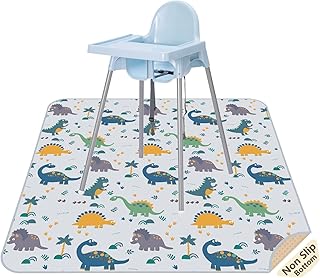
  • Place a washable mat or towel under the high chair for easy cleanup.
  • Use a long-sleeve bib or smock to protect clothing.
  • Offer small portions and refill as needed instead of serving a huge plate.
  • Keep wipes or a damp cloth nearby, but save most of the cleanup for the end.
  • Schedule messy meals when you’re not rushing out the door.
  • Remember that this stage is temporary—each messy meal is building skills your child will use for years.

You don’t have to allow a food explosion at every single meal. Even choosing one or two “practice meals” each day where your baby can explore more freely is a wonderful start.

Gentle Guidance: What Parents Can Do Instead

Rather than focusing on neatness, focus on connection and curiosity. You are your child’s best model and guide. Here are some simple ways to support self-feeding:

  1. Offer safe, soft finger foods.
    Think avocado slices, steamed carrots, banana chunks, cooked peas, or soft scrambled eggs. Make sure foods are cut in shapes that reduce choking risk and are appropriate for your child’s developmental stage.
  2. Sit and eat together when you can.
    Babies learn by watching you. When you sit nearby and enjoy your own meal, you’re teaching them that food is safe, enjoyable, and worth trying.
  3. Provide utensils early.
    You can offer a baby spoon or fork even before your child can fully use it. Let them dip, scoop, and practice while you also offer bites if needed. Over time, they’ll do more and more on their own.
  4. Follow your baby’s cues.
    Watch for signs that they’re full or done—turning away, pushing food away, clamping their mouth shut, or becoming very distracted. Try not to coax “just one more bite” if their body is telling you they’re finished.
  5. Keep the tone positive.
    Comment on what they’re doing: “You’re squishing the banana,” “You picked up that pea all by yourself!” This kind of language supports learning and confidence without focusing on the mess.

The Joy of Discovery

When you let babies feed themselves, you’re giving them more than food—you’re giving them freedom. They get the chance to explore, make decisions, and delight in the simple joy of discovery. Each squishy handful is a lesson in texture, coordination, and confidence.

So the next time you find yourself wiping mashed peas off the wall, take a deep breath and smile. You’re not just cleaning up a mess—you’re witnessing growth in action.

Created by Ms. Vanessa — Early Learning Made Easy

Join Early Learning Made Easy for access to printable training tools, caregiver resources, and member-only learning materials designed to make early childhood development simple and meaningful.

Research & Attribution Note: Early Learning Made Easy resources are created independently by Ms. Vanessa and are informed by evidence-based early childhood and nutrition research (for example, recommendations from pediatric, developmental, and public health organizations). These materials are not formally affiliated with or endorsed by any outside institution.

Recommended Books & Tools 

Reading Picks

Baby-Led Weaning book by Gill Rapley and Tracey Murkett cover

Baby-Led Weaning (Rapley)

Practical guidance on safely supporting self-feeding from the start.

View on Amazon
Child of Mine by Ellyn Satter book cover

Child of Mine (Ellyn Satter)

Feeding with love and good sense—trusting hunger and fullness cues.

View on Amazon
Born to Eat book cover

Born to Eat

Healthy, responsive feeding practices for families.

View on Amazon


Caregiver Tools

As an Amazon Associate I earn from qualifying purchases.


Related Post: Family Traditions That Build Connection 

Related PostLearn how small, predictable family rituals help children feel safe, connected, and loved. Discover how to create lasting traditions. 


Related Post: Little Helpers at the Table, Encouraging Independence in Toddlers and Preschoolers


Find More Information on Developmental Milestones HERE

Note: Content is independently created and informed by evidence-based research (e.g., AAP, USDA, Seligman) but not affiliated with or endorsed by any external institution or author.

Created by Ms. Vanessa — Early Learning Made Easy.

✨ You’re Doing Amazing — Let’s Make Learning Simple ✨

Subscribe to my blog for instant access to today’s Featured Freebie — plus weekly printables, early learning tips, and new resource alerts.

✉️ Subscribe for Instant Access


Want unlimited access to every premium resource and future freebie — forever?

⭐ Become a Premium Member

(One-time purchase. Lifetime access.)

🛍️ Shop All Resources

Already a member? Request your freebie here

No spam — just real tools that make early learning simple, joyful, and evidence-based.

About Early Learning Made Easy:
Created by Ms. Vanessa, CDA-certified Early Childhood Educator. This blog provides simple, joyful, evidence-informed learning activities for families and caregivers.

Affiliate & Research Disclosure:
This site may include Amazon affiliate links. As an Amazon Associate, I earn from qualifying purchases at no additional cost to you. Content is independently created and informed by evidence-based research.

© Early Learning Made Easy — All Rights Reserved.

New to ELME? Start Here...

Early Childhood Education Standards Explained: What Parents Need to Know

Early learning standards are best met through play, relationships, and everyday moments. E A R L Y ...